CT BUSINESSES
The Impact of COVID-19 on the Construction Industry
Changes related to the COVID-19 crisis and the construction and surety industries are still occurring; some data in this article may have changed from the time of article submission and the publication date.
COVID-19 has had far-reaching effects on almost every industry—even those that, like construction, were deemed essential (with a few regional exceptions). Even so, the construction industry reached a 16.6% unemployment rate in April, compared to a record high overall U.S. unemployment rate of 14.7% for the same month. The industry rebounded nicely by August, with unemployment decreasing to 7.6%, compared with 8.4% across all industries.
By August, the construction industry recovered 61% of the jobs lost in March and April, partly due to the end of federal supplements to state unemployment insurance benefits. Still, the pandemic has some contractors concerned about their ability to secure long-term projects to fill their pipelines. Construction backlog was a full month lower year-over-year in July, according to the Associated Builders and Contractors (ABC).
Depending on which construction subsector they work in, contractors are looking to the future with a mixed sense of optimism and caution. As we noted in the 2020 Marcum National Construction Survey, project backlog will get most contractors through the short term. It is the long-term picture that has contractors concerned, with issues like a tighter lending environment, the potential need to diversify suppliers, and workplace safety protocols dimming some of the overall optimism about the future. One thing everyone needs to remember is that, when the economy experiences a downturn, the construction industry is typically the last industry to experience the impact as pre-existing backlog is completed and new work is halted.
Heavy Civil Construction
Contractors employed in heavy civil construction, which continued in many jurisdictions during the economic shutdown, have their share of concerns. Many already are facing supply chain issues and other challenges in keeping their jobs moving forward. According to a new report by Dodge Data & Analytics that measures the current business health of contractors operating in this COVID-19 environment, heavy civil contractors remain optimistic about business conditions despite these challenges. On the downside, the unavailability of skilled labor presses on as a challenge, and more than one-third of respondents expect a decrease in their profit margins.
Commercial Construction
Like their civil construction peers, commercial contractors feel optimistic in general, as long as they can secure financing for new projects and find alternative sources for building materials.
According to Marcum Chief Economist Anirban Basu, those working in the nonresidential construction sector should remain cautious given, tightening financing, less cash flow among property owners, commercial vacancy, and project postponements and cancellations. Current contracts protect contractors for the work they have in progress, but new contracts will be affected by the COVID-19 economy, which can impact bonding requirements.
Office space building projects that were already in process are proceeding on the whole; however, many employees are moving out of cities and working from home, so there is potential that these projects will slow in the coming months and years. The pandemic may have a long-term impact on future high-rise construction projects as more workers adjust to working at home.
Certain parts of the country, such as New York and New Jersey, saw a decrease of 24% in commercial building and multifamily housing construction starts from 2019 through June 2020. On a bright note, New York City began to see gains in starting construction projects from lows in April 2020.
Retail Construction
The retail industry has been severely affected by the pandemic, and some of the changes may be permanent. A number of retail owners already are converting from brick and mortar locations to launching online only businesses. Millennials and younger generations are comfortable shopping online. The pandemic has made a new generation—notably boomers—more comfortable with shopping online; and that will help support online retail operations. That’s not the best news for contractors that did a good portion of work in this sector. E-commerce sales comprised 15% of total retail sales in 2019, according to CBRE data. By 2030, that number is expected to increase to 39%; but the pandemic will almost certainly hasten that growth.
Industrial Construction
At the other extreme, industrial real estate is poised to see a boom; and the growth will bring good news to contractors that construct warehouses. The “pick-pack” facilities that support the volume needed by grocery stores are typically three times the size of retail stores. By some estimates, the U.S. will need another one billion square feet of retail space by 2025. Warehouse space is typically easier to construct and requires less compliance with building codes, both resulting in fewer delays. Expect to see some business leaders include office space within the warehouse itself.
Skilled Labor
The lack of skilled labor has been hindering the growth of construction companies throughout the nation for much of the past decade. More than one-third of survey respondents chose this issue as their greatest business threat. Even the healthiest construction businesses are held back when they can’t find the right talent to complete work. Some companies have offered higher salaries to recruit candidates. Others look toward incentive programs and partnering with industry and community partners. With unemployment down from the high rates at the onset of the pandemic, the problem is likely to persist. We expect more companies to cross-train workers from other trades to make up the shortage.
Lower Profit Margins
For the most part, banks have been managing existing borrowers’ lines of credit; but they are more unlikely to issue new debt, at least in the short term. This may have the effect of delaying projects due to insufficient funding. The last thing a contractor wants is to lay off staff during slow times because it can become difficult to rehire them when things pick up, which could lead to more inefficient labor costs as new employees get up to speed.
If construction backlog continues to see a sharp decline, we can expect an increasingly competitive bidding environment, with some contractors willing to bid jobs at no profit (or a loss) to keep employees busy and secure work to keep cash flowing. However, as Basu states, these indicators could amount to a “perfect storm” that makes its mark on early 2021 financial statements.
Looking Ahead
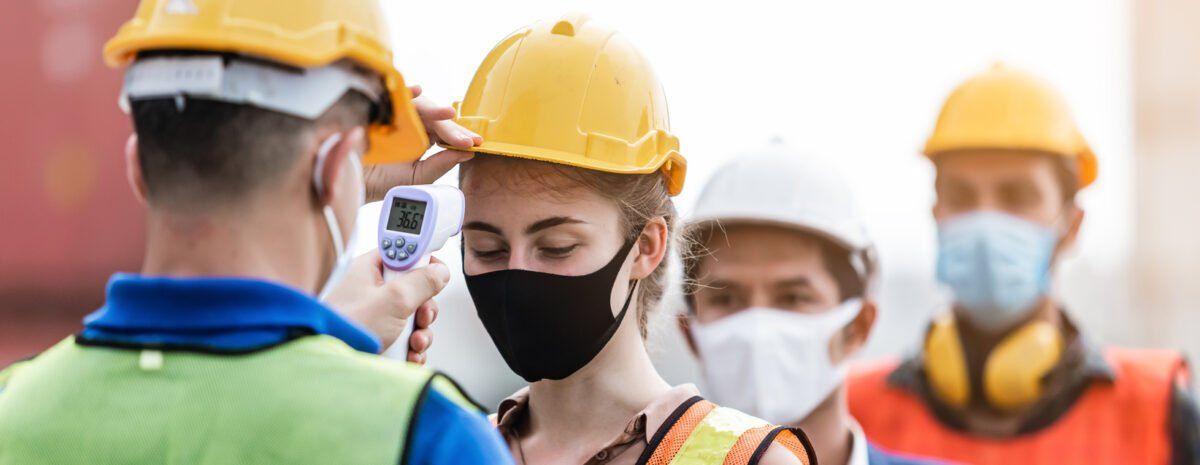
It is clear that certain subsectors within construction have been impacted by COVID-19 more than others. However, just as in any other industry, the construction workforce must plan ahead amid lingering uncertainty about future spikes in COVID-19 cases. Taking safety seriously can be the difference between firms that survive and those that do not. Implementing OSHA construction work guidelines, which call for PPE equipment and social distancing, is a must. When it is not practical to have social distancing, some contractors may want to stagger work shifts.
The construction industry has experienced the pandemic in two parts. First came the decline in construction spending because of shutdowns and subsequent delays. The second is the full impact of reduced construction starts. According to Dodge forecasts, 2020 commercial constructions fell by 20%, less in some markets and much more in others. Residential starts may fall only 5%-10%; only warehouses, as we suggest above, is up.
In July, Construction Dive asked its readers how much longer they expected COVID-19 to impact their companies. Three-quarters of readers expect the impact to last at least a year, if not longer; and another 19% expect it to be at least 18 months.
An earlier-than-expected vaccine and significant federal funding for infrastructure could be a game-changer. Until then, the one thing that remains certain is that contractors should be looking ahead in order to properly manage current efforts.
Find Out More
Access NASBP Virtual Seminars on this topic here: https://learn.nasbp.org/p/legalfrontlines; https://learn.nasbp.org/p/financialimplications; and https://learn.nasbp.org/p/contractorsguidec19.
Access other NASBP Virtual Seminars here: https://learn.nasbp.org/.
Access a NASBP Podcast on this topic here: https://bit.ly/2WQjgDK.
Access free NASBP Podcast episodes here: https://letsgetsurety.org/episodes/.

James Wiedemann
James Wiedemann is a director in the Assurance Services division of the Firm’s New Haven, Connecticut office. He has more than 10 years of experience providing compilation, review and audit procedures in the construction and manufacturing industries. Wiedemann has prepared and presented internally and externally on construction accounting and auditing matters and serves as an advisor to professional staff providing on-the-job training. He can be reached at james.wiedemann@marcumllp.com or 203.781.9721.

Jake Amoroso
Jake Amoroso is a Senior Associate in the Assurance Services division of the Firm’s New Haven, Connecticut office. He provides compilation, review and audit procedures in the construction and manufacturing industries. In addition, Amoroso has experience with reporting requirements, revenue recognition and cost allocation techniques within the construction industry. He can be reached at Jake.Amoroso@marcumllp.com or 203.781.9764.